
Interoperability: More than a technical consideration
Interoperability in digital architecture ensures that different solutions and services can work together smoothly, allowing you to mix and match best-in-class technologies. But it’s much more than just a technical consideration. Interoperability is the lynchpin of a powerful future-proofed digital strategy that enables you to achieve digital acceleration and unleash business potential.
Incremental, multi-layered value
The benefits of interoperability extend far beyond technological freedom. Interoperability fosters a culture of collaboration and innovation, which in turn supports market agility and resilience.
Interoperable technology solutions empower you to:
- Realize true technical freedom and achieve business value
- Experiment without vendor lock-in and enable meaningful technical innovation
- Build resilience in the business and stay competitive
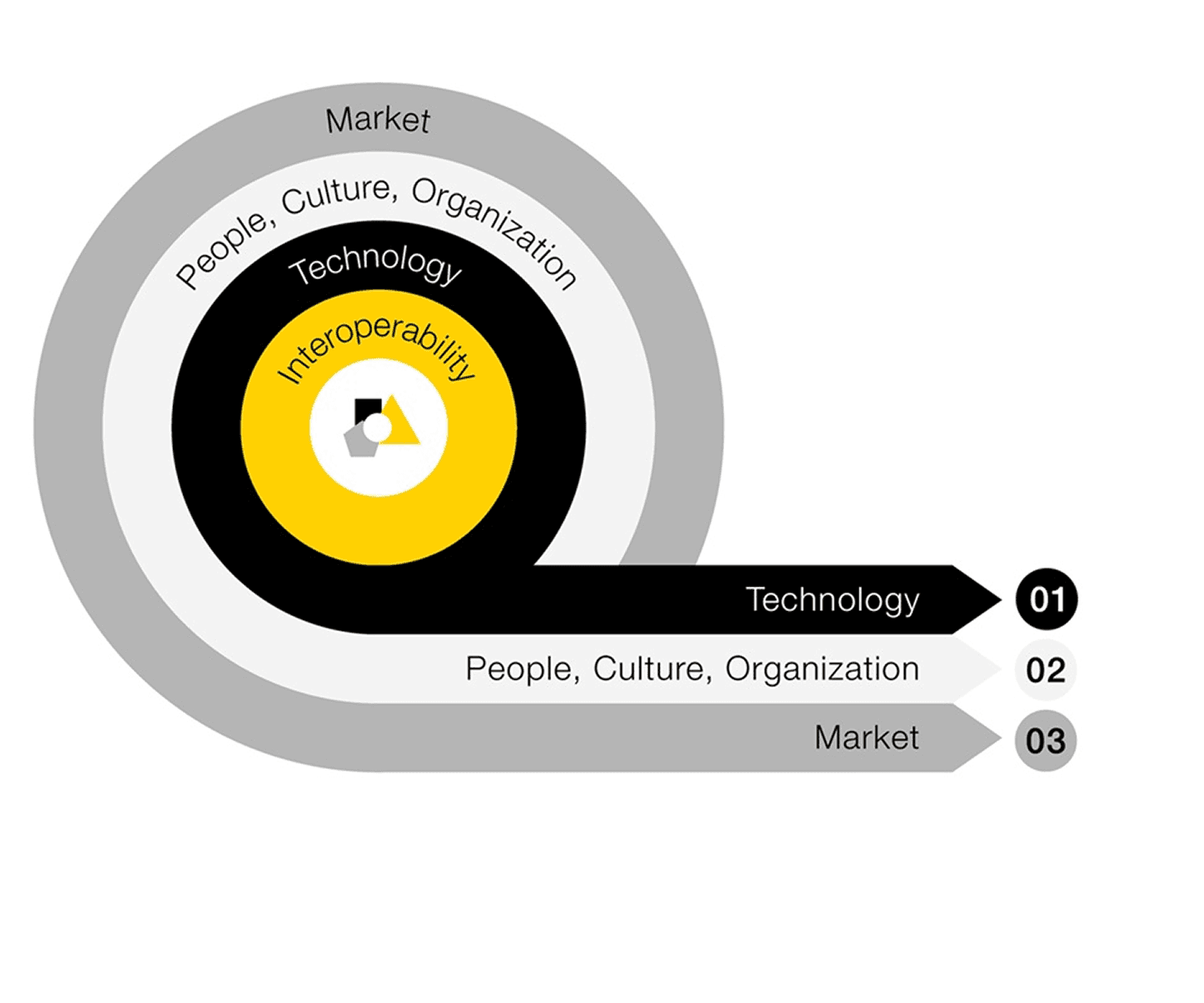
Interoperability Explained
...but, Interoperability is also a critical strategic consideration, as it supports an organization's broader business objectives by driving growth, efficiency, innovation, and agility - ultimately enhancing the organization's ability to meet market demands and succeed in a challenging digital landscape.
Benefits include:
- Adapting to change - Interoperability empowers organizations to seamlessly adapt to emerging technologies and industry standards. As businesses expand, they can scale effortlessly by incorporating new systems or integrating with novel partners, without the need for a complete infrastructure overhaul. With interoperability, organizations enjoy the flexibility to switch or integrate with other technologies as their needs evolve, eliminating the burden of re-platforming.
- Enhanced organizational efficiency and productivity - as interoperable systems allow data to flow seamlessly across different platforms and systems, there is a minimized need for manual data management, reducing the chance of errors, and creating better operational efficiency.
- Faster decision-making - organizational efficiency and interoperability empower businesses to make more timely and informed decisions, granting them a significant competitive advantage in today's rapidly-moving market.
- Staying ahead of competitors and meeting marketing demands - businesses that prioritize interoperability can rapidly adapt to market changes, leverage emerging technologies, and deliver superior customer experiences - positioning themselves as industry leaders.
- Operational inefficiencies - Non-interoperability impedes a range of critical functions, including manual data entry, data duplication, human error, slow processing, and data silos.
- Increased risk of system failures - Siloed, non-interoperable systems increase an organization's vulnerability to system failures and data loss. For instance, if a single system fails or is incompatible with others, it can trigger widespread disruptions that impact critical business functions, from customer orders to internal operations. Furthermore, systems that lack shared backup and disaster recovery protocols leave the organization exposed to data loss and business continuity risks.
- Long-term increased costs - Relying on non-interoperable systems often necessitates custom integrations and continuous maintenance, which can be resource-intensive and financially burdensome. Furthermore, these systems typically incur substantial operational overhead, as the inefficiencies of manual processes, duplicated data entry, and slow response times can drive up operational costs. This diverts critical resources away from more strategic business activities, and the ability to experiment and innovate, ultimately impacting profitability.
- Stifled innovation - Lack of interoperability can hinder the integration of new technologies and innovations, causing companies to miss out on advancements in automation, data analytics, AI, or IoT. This can limit their competitive edge and lead to stagnant business models.
- Limited collaboration - Non-interoperable systems within an organization can create significant internal barriers, such as hindering cross-team collaboration and leading to miscommunication, delayed decision-making, and overall operational inefficiencies across departments.
- Loss of competitive advantage - Organizations that fail to integrate systems or adapt quickly to new technologies will lag behind competitors who leverage interoperability to drive faster innovation, enhanced customer service, and greater operational efficiency. Likewise, a lack of interoperability hinders a company's capacity to adapt to market shifts, regulatory changes, and emerging trends - ultimately compromising its competitiveness.
These interoperability standards can:
- Influence how organizations approach their technology architecture projects
- Guide organizations during their transition to composable architectures
- Ensure organizations that adopt these standards will successfully complete their interoperability transformation
The MACH Alliance Interoperability taskforce has developed a range of resources to help organizations succeed in their digital transformation.
These assets and tools, available on the Interoperability in Technology hub, provide education, standards, and best practices to businesses about interoperability. This empowers companies to accelerate their digital initiatives and achieve long-term success.
Business leaders:
Interoperability is the key for business leaders to make a real organizational impact. Everything you need to know about harnessing interoperability to meet business outcomes can be found HERE
Technology leaders:
Discover the nuts and bolts of how interoperability can unleash business potential in your technology architecture with helpful whitepapers, reference architectures, and diagram generators - you can get it all HERE
Read the latest blog in our Interoperability series: "Interoperate to Iterate Faster"
Get the insights on why interoperability is no longer a mere technical checkbox but a strategic business necessity HERE
By Adam Peter Nielsen, Technology Council Co-Lead, MACH Alliance & CTO, Novicell
Brought to you by the MACH Alliance Interoperability Task Force: