The AI-Enabled Organization: Integrating Tech Roles into Business Ops
Nov 14 2025
Generative AI upends the corporate hierarchy, putting powerful tech in the hands of rank-and-file employees without the management oversight and IT controls. While magnifying the value-add potential of high-performers, it also creates risks and frictions.
In most organizations, IT and business still operate as separate kingdoms, connected only by program management offices operating under tollgate governance procedures and steering committees. The advent of machines trained to write and talk in natural languages – and execute complex knowledge work – changes all that.
From MIS to Isolation to What Comes Next
Systems started in finance departments, with power firmly in business hands. Then came the evolution into separate IT organizations with their own governance, budgets, and priorities. IT operated as a kind of secret guild with mysterious language, revered and separate.
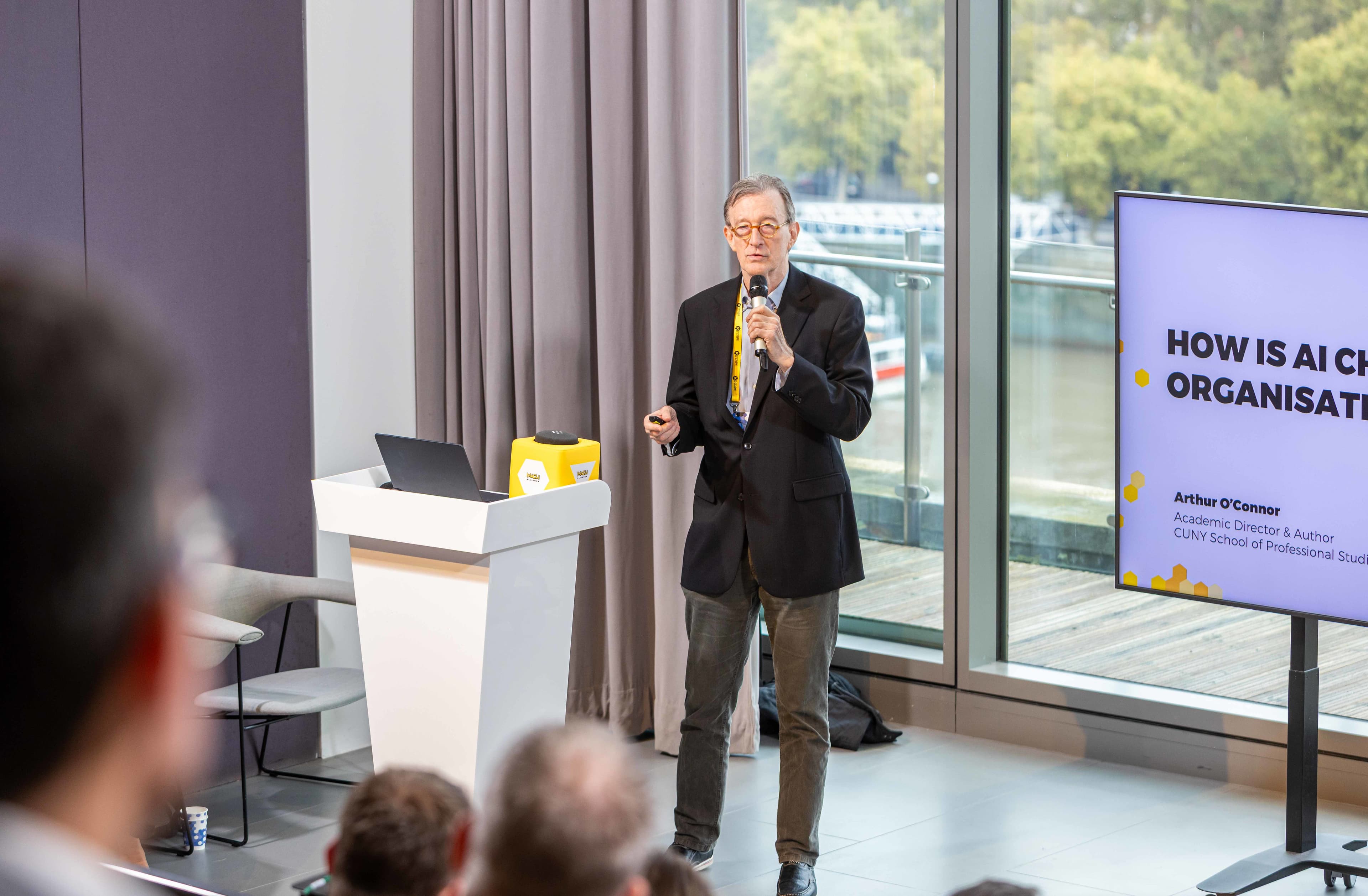
That era is over. AI requires integrated tech-business profit centers, not handoffs between isolated functions. Arthur O'Connor, who researches organizational AI adoption at CUNY's School of Professional Studies, puts it plainly: waterfall development for "mission critical" tasks that take years isn't sustainable. Successful AI adoption requires organizational – not just technical – challenges, requiring changes in human capital, as AI evolves as a general purpose technology and management discipline. And those human capital changes means rethinking hiring and retaining the right mix of talents – employees with both technical and business/soft skills – redefining what they do in assigning roles and responsibilities, and reconfiguring how they are organized – the power hierarchies/reporting relationships.
AI demands iteration, domain expertise, and constant refinement.
The Incentive Structure Problem
Perhaps the greatest challenge isn't technology. It's human capital.
How do you re-engineer incentive structures to make people want to automate their own jobs? How do you promote collaboration when employees compete against each other, and they know AI will create job displacement? How do you plan succession if you're not hiring juniors who can build the judgment needed to make AI work effectively?
The questions pile up. Job descriptions need rethinking: what are the prerequisite capabilities now? Hiring processes break when all resumes are AI-generated. Performance measurement becomes murky when individual contribution is AI-augmented.
Most HR functions aren't equipped for this, they're middle management bureaucracies, not high-powered talent agencies. Firms insist they are meritocracies; yet research consistently shows that employability is largely a function of personality. Organizations still hire and promote mostly on favoritism and chemistry. I'd love to tell you I don't do that, but I do. I probably also do it. Will average performers become a luxury managers can no longer afford?
These aren't comfortable questions, but they're unavoidable. The technology moves faster than organizational design can adapt.
Why MACH Members Can Lead This Shift
Industry norms will shift toward integrated structures, what Arthur O'Connor calls "algorithmic isomorphism,." by which organizations develop best practices in enabling human and intelligent machine collaboration.
MACH architectural principles already break down the silos that slow everyone else. API-first design enables the iterative, collaborative approach that integrated teams need. Cloud-native infrastructure supports the high-velocity deployment cycles that make learning possible. Composable components let teams experiment without breaking existing systems.
Member companies are positioned to tackle both the technical and organizational transformation. The architecture enables the new structure. The structure enables the speed. The speed creates the competitive gap.
The Architecture Problem Meets the Incentive Problem
MACH provides the technical foundation. But organizations also need to solve incentive design, succession planning, and performance measurement in an AI-augmented world. The winners will tackle both problems simultaneously.
So here's where we are. Integration shouldn’t be the exception anymore. The technical architecture and the organizational structure have to evolve together. And look, rewiring your organization is never as straightforward as consultants make it sound. But the alternative is getting forced into it after your competitors have already figured it out.
We can take some comfort in the fact that the real threat to humanity may still be natural stupidity, not artificial intelligence. The technology is solvable. The incentives, the politics, the entrenched behaviors, that's where companies either figure it out or fall behind.
Author
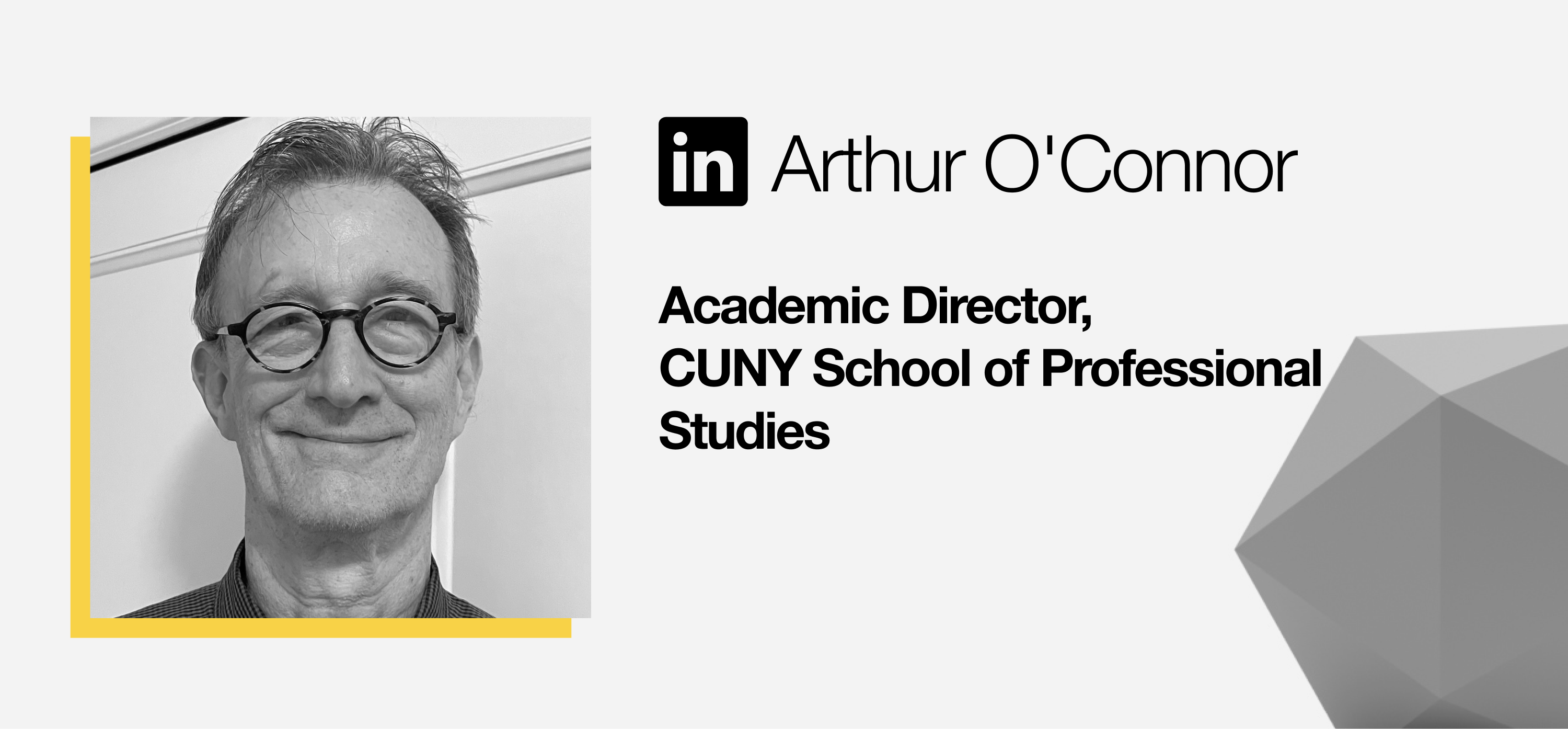
Arthur O'Connor is a professor at CUNY School of Professional Studies, where he teaches about AI's organizational impact, he spoke at MACH X in October 2025 in London.