
The First Wave of Agentic AI Is Already in Production. Here's What It Actually Looks Like.
May 7 2026 - By Alliance
By Everett Zufelt, Program Lead, Agent Ecosystem, MACH Alliance
Five enterprises deployed AI agents with measured outcomes. Their experiences reveal patterns the industry should pay attention to.
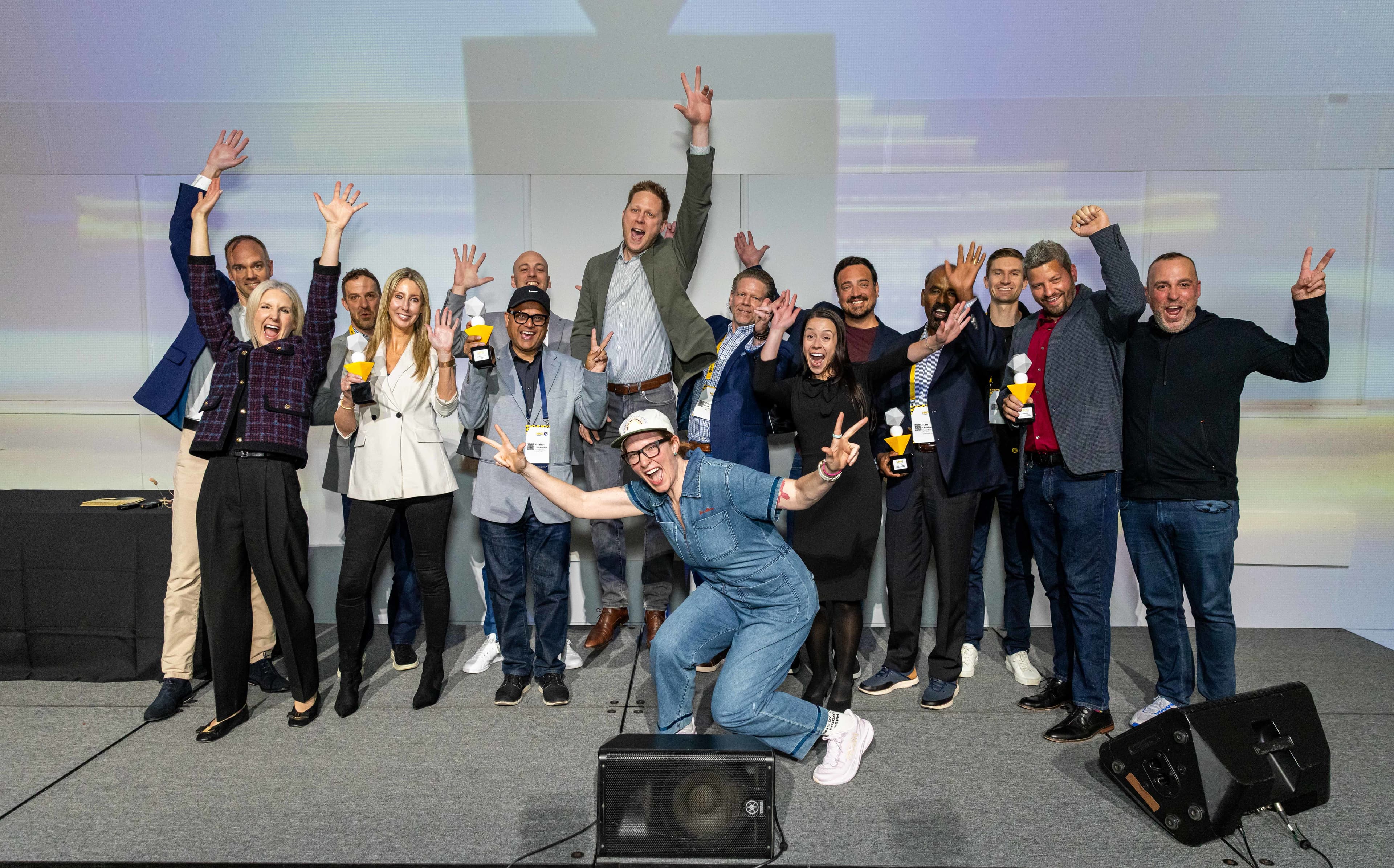
The conversation around agentic AI tends to split into two camps: breathless futurism about autonomous everything, or cautious skepticism that it's mostly demo-ware. Neither is particularly useful. This year's MACH Alliance Agentic Achievement Awards surfaced something more instructive - production deployments, across very different industries, with quantified results and hard-won lessons about what it takes to make agents work.
The biggest wins aren't coming from the obvious use cases
The agentic use cases getting the most attention - chatbots, content generators, code assistants - aren't where the strongest outcomes showed up. The biggest measured impact came from agents embedded in operational workflows where the alternative was manual, repetitive, and expensive.
AmerCareRoyal, a B2B distributor, deployed a Gemini-powered agent to process unstructured purchase order PDFs - documents that rules-based automation couldn't reliably parse. The agent interprets each PDF, extracts order data, assigns a confidence score, and routes it across Zendesk, Emporix, and a legacy IBM AS/400 ERP. Processing dropped from eight minutes to sixty seconds. For structured POs, 99% now flow straight through without human touch, freeing 267 labor hours per month.
At the other end of the spectrum, Bash - part of South Africa's TFG Group - deployed a Bloomreach Clarity agent in their consumer shopping experience. It watches for shoppers browsing three or more products without converting, then autonomously decides whether to engage, what to recommend, and when to back off. During Black Friday 2024, with no custom engineering from Bash, this produced a 35.2% conversion lift and 39.8% increase in revenue per visitor.
Different problems, different industries, different architectures. But both succeeded because they targeted a specific bottleneck and scoped the agent tightly enough to prove impact before expanding.
Scale looks different from what the demos suggest
CarParts.com operates over 20 agents spanning customer-facing shopping assistance, internal operations, vendor communication, and product data enrichment - across five LLM platforms simultaneously. Their AskSpark agent uses nine specialized tools for vehicle fitment questions. Internally, agents consolidate dashboards, automate vendor email processing, and enrich product data. The compound impact: 10x faster prototyping, two hours reclaimed per developer per day, over $500K in savings within six to eight months, and 100,000+ SKUs enriched. What holds it together is a Vehicle Context Authority - a shared state layer that maintains coherence across agents that would otherwise operate in isolation.
General Motors took a different approach to coordination. GM implemented Aprimo's multi-agent platform under the name AssetIQ, deploying six agent types - Librarian, Planning, Production, Compliance, Critic, and Orchestration - that work as a system. When a Librarian agent generates metadata, it's immediately available for Compliance agents to validate against 130+ regulatory fields, and for Production agents to reuse. The system serves 16,000+ users across 35 agencies, with 90% of metadata creation automated and compliance validation 70% faster.
Composable architecture isn't a nice-to-have. It's the prerequisite.
If there's a single pattern across all five deployments, it's this: none of them would have been possible on a monolithic stack.
The clearest proof came from Wyze. Working with Pipe17 and Stripe, the smart home brand built an end-to-end agentic commerce pipeline. AI agents on ChatGPT, Claude, Gemini, and Perplexity browse Wyze's catalog, evaluate products, and complete purchases through Stripe's Agentic Commerce Suite. Pipe17's orchestration layer then autonomously routes fulfillment across Amazon MCF, 3PL partners, and direct warehouses based on real-time inventory, geography, carrier performance, and cost. Click-to-delivery times dropped by more than 50%.
The telling detail: adding AI agents as a new buyer channel required zero changes to Wyze's existing fulfillment infrastructure. The agents plugged into the same API-first orchestration layer that already served DTC and marketplace channels. That's the practical dividend of composable architecture - not theoretical flexibility, but the ability to absorb an entirely new class of buyer without re-platforming.
Pipe17 also built the first Model Context Protocol server for order management and co-founded the Commerce Operations Foundation with an open standard for commerce data objects - shared infrastructure designed to make the next deployment easier for everyone.
What these deployments have in common
Five different enterprises, five different architectures, but consistent patterns: start with a narrow, high-value workflow. Measure before you expand. Build governance from the start - ACR established an AI Center of Excellence before writing a line of agent code. And treat composable, API-first infrastructure as the foundation, not the finish line.
What none of these teams did was wait for a perfect agent strategy. They picked a workflow, scoped it tight, measured what happened, and expanded from there - on infrastructure that was ready because it was composable in the first place.
Author
Everett Zufelt is Program Lead of the Agent Ecosystem and VP, Agentic Systems & Partnerships at Orium. Learn more about the agent ecosystem vision at agentecosystem.org